


Science
The Journey from Sugar to Spirit
Mar
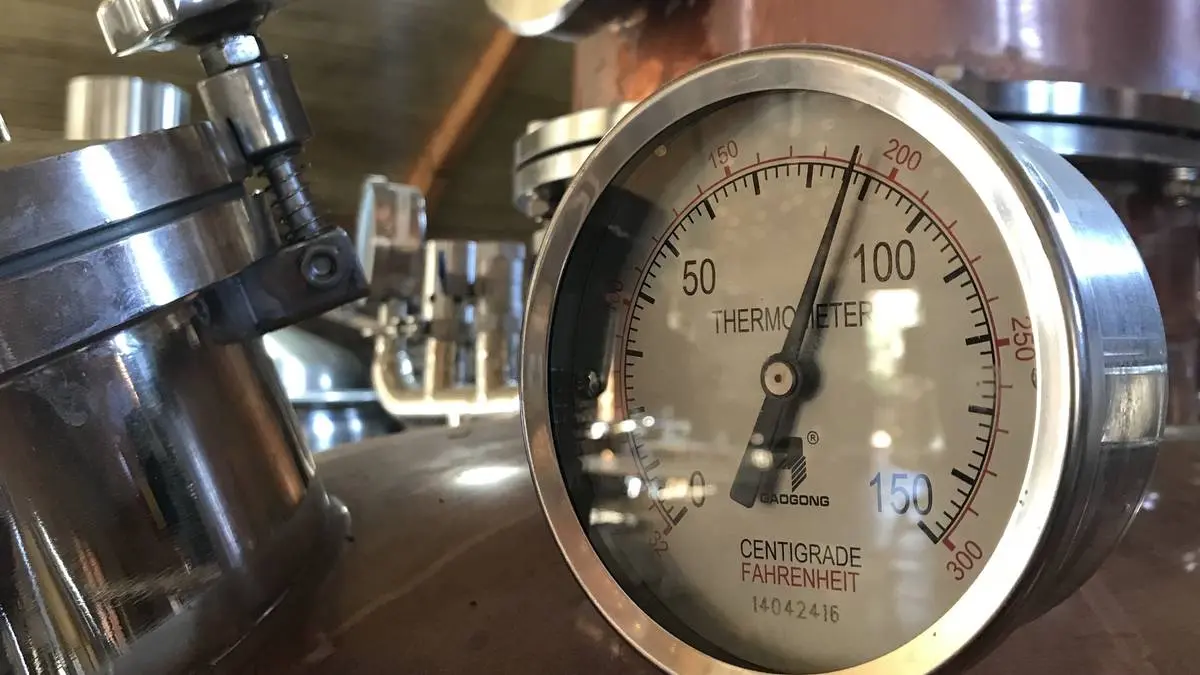
When people visit Black Horse’s distillery, the first thing they usually notice is the still. Copper, heat, vapour, and finally that first clear drop of spirit. It feels like that is where the magic happens.
But the truth is that the real story begins earlier, quietly, inside the fermentation tank.
Long before the still runs, yeast is hard at work turning sugars into alcohol and building the flavour that will eventually define the spirit in your glass.
The Quiet Work of Yeast
At the centre of fermentation is yeast, most commonly the species Saccharomyces cerevisiae. These microscopic organisms consume sugar to produce energy. As they do, they release ethanol and carbon dioxide.
In reality, fermentation is far more interesting than that.
Alongside ethanol, yeast produces dozens of other compounds: higher alcohols, esters, aldehydes, and organic acids. Distillers often refer to these collectively as congeners, and they are responsible for much of the aroma and flavour in a finished spirit.
In other words, fermentation is already writing the flavour story long before distillation begins.
Not All Sugars Behave the Same
Different sugars ferment in slightly different ways, and that changes how fermentation unfolds.
Glucose is the simplest sugar for yeast to consume. It moves directly through the metabolic pathway known as Glycolysis, where yeast converts it into ethanol and carbon dioxide. Fermentations rich in glucose tend to start quickly and move fast.
Fructose, the sugar commonly found in fruit, ferments well too, but usually a little more slowly than glucose. It can influence the production of esters, which are the compounds responsible for many fruity aromas in spirits.
Sucrose, the familiar table sugar, is actually made up of two smaller sugars: glucose and fructose. Yeast first splits sucrose into those two components before fermentation can continue.
In grain-based fermentations the story is slightly different. During mashing, enzymes break starch into sugars such as maltose and maltotriose. Yeast can ferment these sugars as well, but the process is slower and requires the yeast to actively transport them into the cell.
These small biochemical differences affect fermentation speed, yeast stress, and ultimately the flavour compounds produced along the way.
Where the Other Alcohols Come From
Ethanol is only one of many alcohols produced during fermentation.
Yeast also produces what distillers call higher alcohols, sometimes referred to as fusel alcohols. Compounds such as propanol, butanol, and isoamyl alcohol form during amino acid metabolism through pathways like the Ehrlich pathway.
In small amounts, these alcohols add body and complexity. Too much of them, however, can make a spirit feel heavy or harsh.
Temperature, yeast strain, nutrients, and fermentation time all influence how many of these compounds appear.
This is why distillers pay close attention to fermentation. It is not just about producing alcohol. It is about shaping the entire chemical landscape that will eventually pass through the still.
The Distiller’s Moment: Making the Cut
Once fermentation is complete, the liquid contains water, ethanol, and hundreds of other compounds produced by yeast.
Distillation is the process of separating and concentrating those compounds. As the still heats up, different substances vaporise at different times. Distillers traditionally divide the run into three sections.
The heads come off first. These early vapours contain lighter compounds such as methanol and acetaldehyde. They often have sharp or solvent-like aromas and are usually removed or recycled.
Next comes the hearts. This is the portion the distiller wants to keep. It contains the clean ethanol along with the balanced congeners that give the spirit its character.
Finally the tails appear later in the run. These contain heavier compounds such as higher alcohols and fatty acids. Some of these add depth when present in small amounts, but too much can make a spirit taste oily or overly heavy.
The exact moment when the distiller switches from heads to hearts, and later from hearts to tails, is known as making the cut.
This is where experience really matters.
Two distillers could run the same fermentation through the same still and produce noticeably different spirits simply by making slightly different cuts.
Where It All Comes Together
At Black Horse Distillery, the still may be where visitors see the action, but fermentation is where the personality of the spirit begins to form.
Yeast quietly transforms sugar into a whole spectrum of alcohols and flavour compounds. Distillation then becomes the moment of selection, where the distiller decides which of those compounds belong in the final spirit.
In that sense, every spirit is really made twice.
First by yeast during fermentation.
And then by the distiller, when the cut is made.