




Real life
Magaliesburg
May
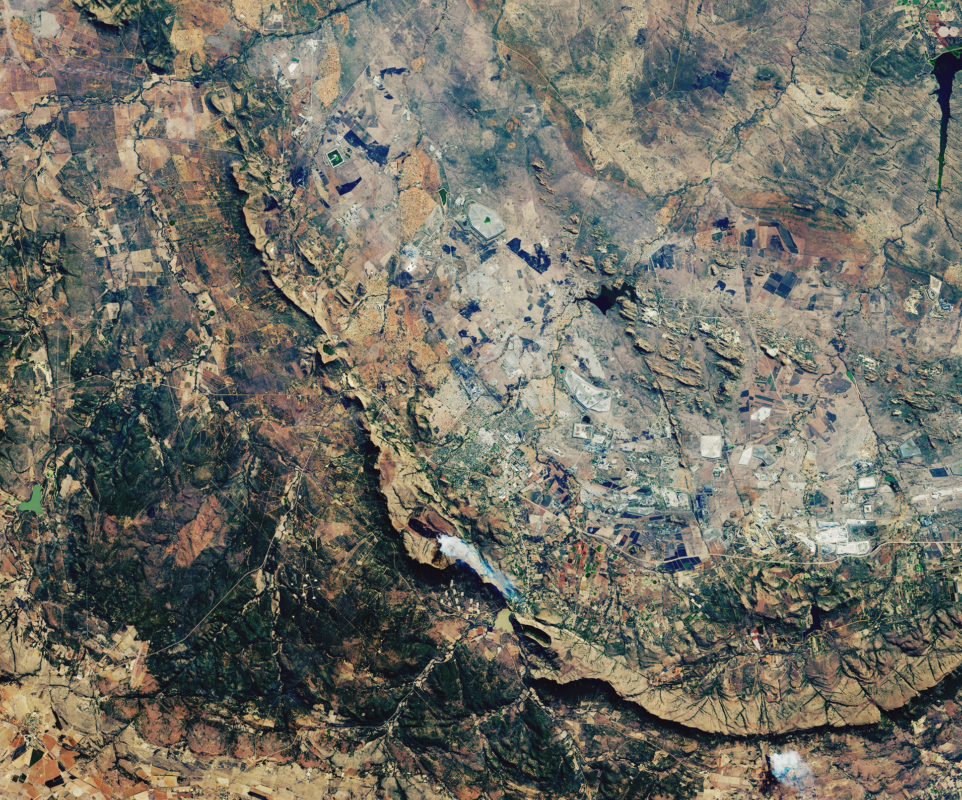
The Magaliesberg is regarded as one of the oldest mountain ranges on Earth, with origins dating back more than two billion years. Its worn, layered ridges contrast sharply with younger, jagged mountain systems, offering visible evidence of immense geological age. Beyond their physical presence, these mountains have historically shaped movement through the region, serving both as natural corridors and barriers that influenced patterns of migration and settlement.
The Origin of the Name
The name “Magalies” is derived from Mogale wa Mogale, a leader of the Bakwena ba Mogopa people who inhabited the region long before European arrival. Early settlers and Voortrekkers adapted his name into variations such as “Magali” and “Magalies,” which gradually became associated with the surrounding landscape.
Over time, this evolved into the name Magaliesberg, meaning “Mogale’s mountain,” anchoring the identity of the region in its pre-colonial history.
Henry “Oude Baas” Hartley
Long before railways and formal settlements, the region was shaped by early pioneers and frontier figures.
Henry Hartley, often referred to as “Oude Baas,” emigrated from England as a child in the 1820s. Although trained as a blacksmith, he later settled in the Magaliesburg area, where he farmed tobacco.
From his farm Thorndale, near present-day Magaliesburg, Hartley became one of the earliest European settlers to establish sustained activity in the region. He was widely known as a trader, hunter, and explorer, regularly undertaking long journeys by ox-wagon into the interior of southern Africa, particularly into Matabeleland (modern-day Zimbabwe).
These expeditions were not merely for hunting elephants; they formed part of early trade and exploration routes that connected the interior with settlements in the Transvaal. In this way, Hartley contributed to opening up the region economically and geographically during a formative period of expansion.
Railways and the Gold Era
The discovery of gold in the Witwatersrand during the 1880s led to rapid infrastructure expansion across the Transvaal. A railway line was constructed from Johannesburg, passing through Krugersdorp and Magaliesburg, and extending westward toward Zeerust.
The railway station ultimately gave rise to the settlement of Magaliesburg, which developed around this transport route.
Although some gold was found in the Magaliesberg area, deposits were limited, and mining activity remained small-scale and scattered. As a result, the region developed more strongly around agriculture and transport than large-scale mining.
The Second Boer War
During the Second Boer War, the Magaliesberg became strategically significant. British forces relied on the railway to transport troops and supplies, while Boer commandos used the mountains and passes to conduct mobile, guerrilla-style operations.
To secure railway lines and key routes, the British constructed stone blockhouses across the region. One of the most notable surviving examples is Barton’s Folly near Hekpoort, named after Lieutenant-General Geoffrey Barton, declared a national monument on 16 March 1984. Other blockhouses along routes such as Breedts Nek have largely fallen into ruin but remain visible reminders of the conflict.
The Cradle of Humankind
A short distance from Magaliesburg lies the Cradle of Humankind, one of the world’s most significant paleoanthropological regions. Sites such as the Sterkfontein Caves have yielded fossils that are central to understanding human evolution.
Discoveries of fossils of early hominins such as Australopithecus in these caves have contributed substantially to scientific knowledge about human evolution.
An Area of Natural and Cultural History
Together, these elements—ancient geology, indigenous heritage, frontier expansion, industrial development, and scientific discovery—combine to make the Magaliesberg and Magaliesburg region a uniquely layered landscape. It is a place where deep natural history and human experience intersect in ways that remains visible today.
-
https://albany1820.com/histories/Henry%20Hartley/The%20Tale%20of%20Henry%20Hartley%20of%20Thorndale.pdf
-
https://sahistory.org.za/place/blockhouse-hekpoort-krugersdorp
-
https://www.findagrave.com/memorial/283408770/henry-hartley