




Spirits
Did saving on cargo space give us Brandy?
Aug
Brandy has been part of South African culture for more than 350 years, but its story begins thousands of kilometres away, aboard the merchant ships of Europe.
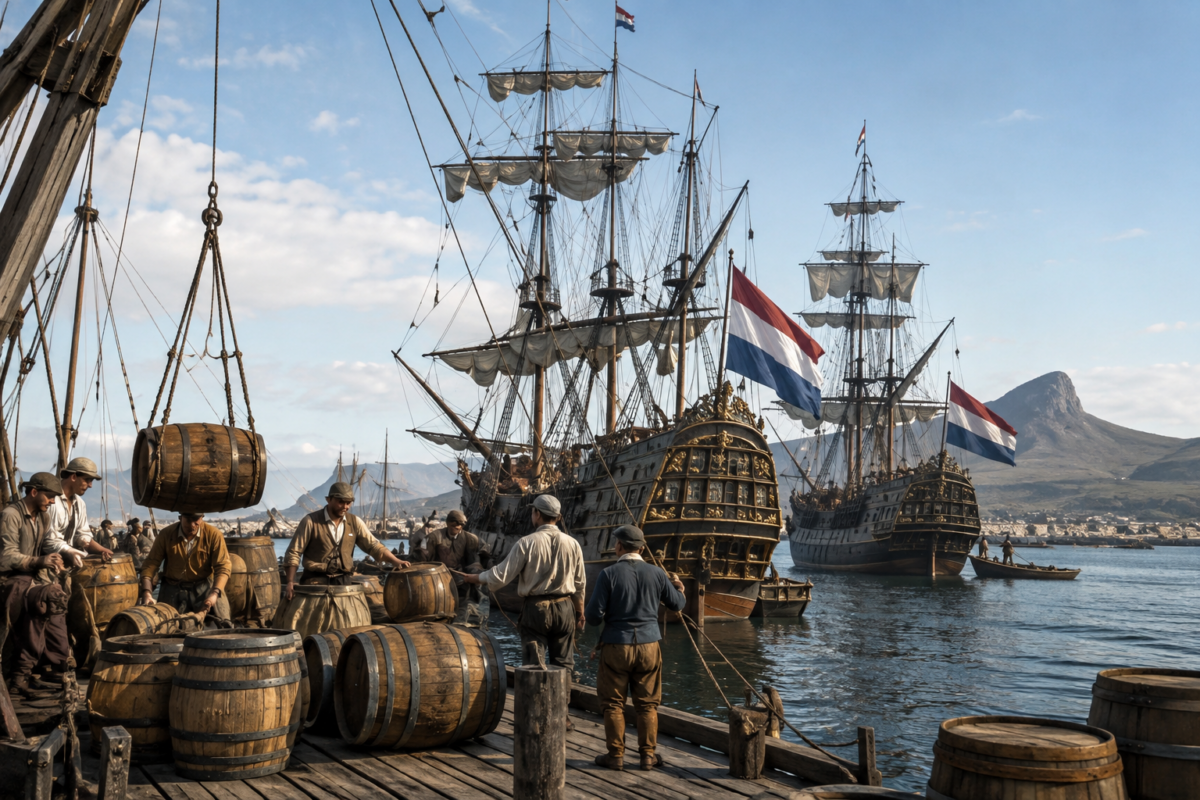
Wine was valuable cargo, but transporting it was difficult. Barrels were heavy, occupied precious space and wine did not always survive long voyages particularly well. Distillation offered an ingenious solution. By removing much of the water, merchants could transport a smaller volume of concentrated wine spirit, saving valuable cargo space and reducing costs.
The Dutch called it brandewijn, meaning “burnt wine.”
The plan was to transport the spirit and add water again at its destination. But the wooden barrels had other ideas.
During months at sea, the spirit interacted with the oak. It developed colour, softened and gained flavours reminiscent of vanilla, nuts, caramel and spice. Eventually, people realised there was little reason to add the water back. The barrel had transformed a practical shipping solution into a remarkable drink.
Brandy also became part of life at sea. Sailors were not generally paid in brandy, but spirits were commonly included in naval rations. Rum later became the spirit most associated with sailors, and remarkably, the Royal New Zealand Navy continued its daily rum ration until 1990.
South Africa’s own brandy story began, fittingly, aboard a ship.
In 1672, the Dutch vessel De Pijl lay anchored in Table Bay when wine made from Cape-grown grapes was distilled aboard her. It became South Africa’s first recorded brandy distillation.
More than 350 years later, brandy remains unmistakably part of South African culture.
So next time you pour a brandy and Coke, wait before adding the Coke. Look at its golden colour, smell the oak and take one sip.
The Coke can wait. The brandy already has.
test